
Jacksonville buyers typically pay lender fees, Florida documentary stamp tax on their mortgage at $0.35 per $100 of the loan amount, title charges, Duval County recording fees, third-party service costs, and prepaid items including escrow deposits. The exact total depends on your loan amount, lender, and contract terms.
What closing costs does a buyer pay in Jacksonville, Florida?
Jacksonville buyers pay several categories of costs at closing: Florida state taxes (including documentary stamp tax on the mortgage at a fixed statutory rate), lender fees, title and settlement charges, Duval County recording fees, third-party service costs like appraisal and inspection, and prepaid items including homeowners insurance and escrow deposits. Which party pays which line item depends on your contract and local custom, but the state taxes are fixed by law and non-negotiable.
Key Takeaways
- Florida's documentary stamp tax on mortgages is set by statute at $0.35 per $100 of the loan amount, with no cap, and applies to every financed purchase in Jacksonville.
- Duval County recording fees are $10.00 for the first page of a document and $8.50 for each additional page, plus a $1.00 indexing fee per name after the fourth, these are county-set and not negotiable.
- Buyer closing costs in Jacksonville fall into five categories: state taxes, lender fees, title and settlement charges, third-party services, and prepaid items with escrow deposits.
- Who pays deed doc stamps and owner's title insurance is negotiable in the contract, local custom in Duval County leans one way, but every deal is different and sellers can credit buyers for these costs.
- Cash buyers skip the mortgage doc stamp and most lender fees, but still owe recording fees, title charges, third-party service costs, and prepaids.
One of the most common questions I get from buyers, especially relocation clients moving to Jacksonville from out of state, is some version of "how much cash do I actually need to show up with at closing?" The down payment is the number they've been planning around, but closing costs catch a lot of people off guard.
Florida has some state-specific taxes that don't exist in every market, and Duval County has its own recording fee schedule. If you're used to buying in another state, the line items on your closing disclosure will look different here. Here's how I walk my clients through each category so there are no surprises on closing day.
What are the five categories of buyer closing costs in Jacksonville?
Every Jacksonville buyer's closing disclosure will have costs that fall into one of these five buckets. Some are fixed by law. Some are set by your lender. Some are negotiable in the contract. Knowing which is which matters.
1. Florida state taxes on financed purchases
If you're financing your purchase, the most material law-fixed cost on your closing disclosure is the documentary stamp tax on your mortgage. Under §201.08, Florida Statutes, the tax is $0.35 per $100 (or fraction thereof) of the indebtedness secured by the mortgage. There is no cap. The Florida Department of Revenue confirms this rate applies statewide, including Jacksonville and Duval County, and it is current as of Q3 2026.
This tax is calculated on the full loan amount, regardless of whether the indebtedness is contingent or absolute, per the Florida Department of Revenue's Documentary Stamp Tax Overview. It shows up as a buyer-side debit on your closing disclosure, and it's not something you can negotiate away, though a seller can agree to credit you for it.
There is also a documentary stamp tax on the deed itself, governed by §201.02, Florida Statutes. The Florida Department of Revenue is clear that the statute sets the tax rate and the obligation, it does not assign responsibility to buyer or seller. In Duval County, deed doc stamps are commonly a seller-side cost by local custom, but this is negotiable in the contract. Every deal is different, and I always make sure my buyers know what they've agreed to before we get to the closing table.
2. Lender fees
Your lender will charge fees for originating and processing your loan. These typically include an origination fee, underwriting fee, processing fee, and any discount points you've chosen to pay to buy down your rate. Credit report and flood certification fees are also common lender-side charges.
Lender fees vary significantly from one institution to another. The CFPB's Loan Estimate explainer walks through how these fees appear on the Loan Estimate you receive within three business days of applying, and your lender is required to give you that document before you commit. I always tell my buyers to compare Loan Estimates from at least two lenders, the differences in origination fees and points can be meaningful.
3. Title and settlement charges
In Jacksonville, your closing is handled by a closing agent, typically a title company. The title-related charges on your closing disclosure usually include a lender's title insurance policy (required by your lender if you're financing), a settlement or closing fee charged by the title company, a title search or commitment fee, and sometimes a municipal lien search.
Owner's title insurance, which protects your own equity, not just the lender's, is separate from the lender's policy. In Duval County, it's common for the seller to pay the owner's title policy by local custom, but again, this is negotiable. In competitive offer situations or new construction, the assignment of title costs can shift. I've seen builders offer closing cost credits tied to using their preferred title company, which can effectively move some of these charges off the buyer's side.
When both an owner's policy and a lender's policy are issued at the same time, title companies typically offer a simultaneous-issue discount on the lender's policy. Ask your closing agent about this, it's worth confirming.
4. Duval County recording fees and third-party services
Recording fees in Jacksonville are set by Duval County and are not negotiable. Per the Duval County Clerk of Courts Recording Department, the schedule is $10.00 for the first page of a document and $8.50 for each additional page, plus a $1.00 indexing fee per name after the fourth. This applies to the deed, the mortgage, and any riders or HOA documents that need to be recorded. Longer documents mean higher recording fees, this is one of those line items that's small but fixed.
Your title company will typically bundle the recording fees into the title services section of your closing disclosure, and in most Jacksonville closings the documents are e-recorded through the title company rather than hand-delivered to the courthouse. The Duval County Clerk's office at 501 West Adams Street is available for walk-in recording of post-closing instruments like satisfaction of mortgage, but your purchase closing itself will almost certainly go through your title company.
Third-party services, appraisal, home inspection, termite/WDO inspection, and survey, are also buyer-side costs in most Jacksonville transactions. The appraisal is ordered by your lender and typically paid upfront or at closing. Home inspections and termite inspections are usually paid directly to the inspector before or at the time of service. Survey costs, when required, generally appear as a buyer-side debit on the closing disclosure unless the seller agrees to provide one or credit you for it.
Jacksonville contracts commonly call for thorough inspections, and I always recommend a general home inspection, a WDO (wood-destroying organism) inspection, and a roof inspection as a baseline. These are almost always buyer-ordered and buyer-paid, and they're worth every dollar.
5. Prepaid items and escrow deposits
Prepaids and escrow deposits are not fees, they're your own money going into accounts you control or toward costs you'd pay anyway. But they still require cash at closing, and they're often the part of the closing disclosure that surprises buyers the most.
Prepaid items typically include:
- Prepaid interest, interest that accrues from your closing date to the end of that month, before your first mortgage payment kicks in
- Prepaid homeowners insurance, your lender will require you to pay the first year's premium upfront at closing
- Initial escrow deposits, your lender collects upfront deposits for property taxes and insurance to fund your escrow account
The size of your escrow deposit depends on your property tax rate, your insurance premium, and how many months' cushion your lender requires. In St. Johns County communities like Nocatee, Rivertown, Silverleaf, and EverRange, HOA and CDD fees also factor into escrow calculations. This is one of the areas where I always tell my buyers to ask their lender for a detailed breakdown early in the process, not just at closing.
For a deeper look at what buyers should expect in the communities I work in, check out my Jacksonville relocation resources on the Living in Jacksonville FL Team site.
Which closing costs are fixed by law and which can I negotiate?
This is the question I get most often once buyers understand the categories. Here's the honest breakdown:
| Cost Category | Fixed or Negotiable? | Notes |
|---|---|---|
| Doc stamps on mortgage (buyer) | Fixed by state law | $0.35 per $100 of loan amount; no cap; §201.08 FL Statutes |
| Doc stamps on deed | Tax rate fixed; who pays is negotiable | Seller pays by local custom in Duval County, but contract controls |
| Duval County recording fees | Fixed by county | $10 first page, $8.50 each additional page; set by Duval Clerk |
| Lender fees (origination, underwriting, processing) | Negotiable with lender | Compare Loan Estimates from multiple lenders |
| Owner's title insurance | Negotiable in contract | Seller commonly pays in Duval County by local custom |
| Lender's title insurance | Required by lender; rate varies | Simultaneous-issue discount available when owner's policy also issued |
| Appraisal, inspection, survey | Buyer-side by custom; negotiable | Seller can credit; typically buyer-ordered and buyer-paid |
| Prepaid interest, insurance, escrow deposits | Amount varies; not waivable | Depends on loan amount, closing date, tax rate, insurance premium |
The key takeaway from that table: the state taxes are fixed in rate, but who pays them is often a contract negotiation. A seller can agree to credit you for your mortgage doc stamps. Builders sometimes offer closing cost credits. In a balanced market, it's worth asking, the worst answer is no.
Your specific numbers depend on your loan amount, your lender's fee structure, your insurance premium, the property's tax assessment, and what you negotiate in the contract. That's exactly why I walk my buyers through a preliminary closing cost estimate before we ever make an offer. If you want to know what your numbers actually look like, that conversation starts with a call.
Frequently Asked Questions
What closing costs does a buyer pay in Jacksonville, Florida when getting a mortgage?
Jacksonville buyers with a mortgage pay Florida documentary stamp tax on the loan at $0.35 per $100 of the loan amount, lender origination and processing fees, title and settlement charges from the closing agent, Duval County recording fees, third-party costs like appraisal and inspection, and prepaid items including homeowners insurance and escrow deposits for taxes and insurance. The exact total depends on your loan amount, lender, and what costs you negotiate the seller to cover.
Which closing costs are fixed by Florida law and which can I negotiate with the seller or my lender?
The documentary stamp tax on your mortgage is fixed by §201.08, Florida Statutes at $0.35 per $100 of the loan amount, this rate is not negotiable, though a seller can credit you for it in the contract. Duval County recording fees are also set by the county and not adjustable. Lender fees, title charges, and who pays deed doc stamps are all negotiable between buyer and seller in the purchase contract.
Do buyers or sellers usually pay the owner's title insurance and deed doc stamps in Duval County?
By local custom in Duval County, the seller commonly pays the owner's title insurance policy and the documentary stamp tax on the deed, but this is not required by law. The Florida Department of Revenue confirms that the statute sets the tax rate and obligation but does not assign it to buyer or seller. In competitive offer situations or new construction, these costs are sometimes shifted or credited differently, your contract controls, not local custom.
What's the difference between lender fees, title fees, and prepaids on a Jacksonville home purchase?
Lender fees (origination, underwriting, processing, discount points) are charged by your mortgage lender for making the loan. Title fees are charged by the closing agent for the settlement process, title search, and insurance policies. Prepaids are not fees at all, they're upfront deposits for prepaid interest, homeowners insurance, and your escrow account for future taxes and insurance. All three show up on your closing disclosure, but they serve different purposes and go to different parties.
If I pay cash for a home in Jacksonville, which closing costs go away and which do I still have to pay?
Cash buyers skip the mortgage documentary stamp tax entirely (since there's no loan being recorded) and avoid all lender fees, lender's title insurance, and the appraisal ordered by a lender. You still pay Duval County recording fees to record the deed, any title search and settlement fees charged by the closing agent, third-party service costs like inspection and survey, and prepaid homeowners insurance. Cash purchases have a meaningfully shorter closing cost list, but they're not free.
Closing costs in Jacksonville have more moving parts than most buyers expect, especially once you factor in Florida's state taxes and Duval County's recording fee schedule. The good news is that once you understand which costs are fixed by law and which are negotiable, you can go into the contract process with a clear picture of what you're actually committing to.
I walk every one of my buyers through a preliminary closing cost breakdown before we make an offer, not a generic estimate, but numbers tied to their actual loan amount, the specific property, and what we're asking the seller to cover. If you're buying in Jacksonville, Nocatee, Rivertown, Silverleaf, EverRange, or Ponte Vedra Beach and want to know what your cash-to-close number actually looks like, let's talk.
LET'S TALK ABOUT YOUR NEXT MOVE
Call/Text: (904) 599-2125
Email: greg@livinginjacksonvillefl.com
Website: https://www.livinginjacksonvillefl.com/
Want more real estate insight like this? Follow and Subscribe to the Living in Jacksonville FL Team on YouTube (@LIVINGINJACKSONVILLEFL) for neighborhood tours, market updates, and buyer tips you won't find anywhere else.
About Greg DeTullio, Broker/Owner, Living in Jacksonville FL Team
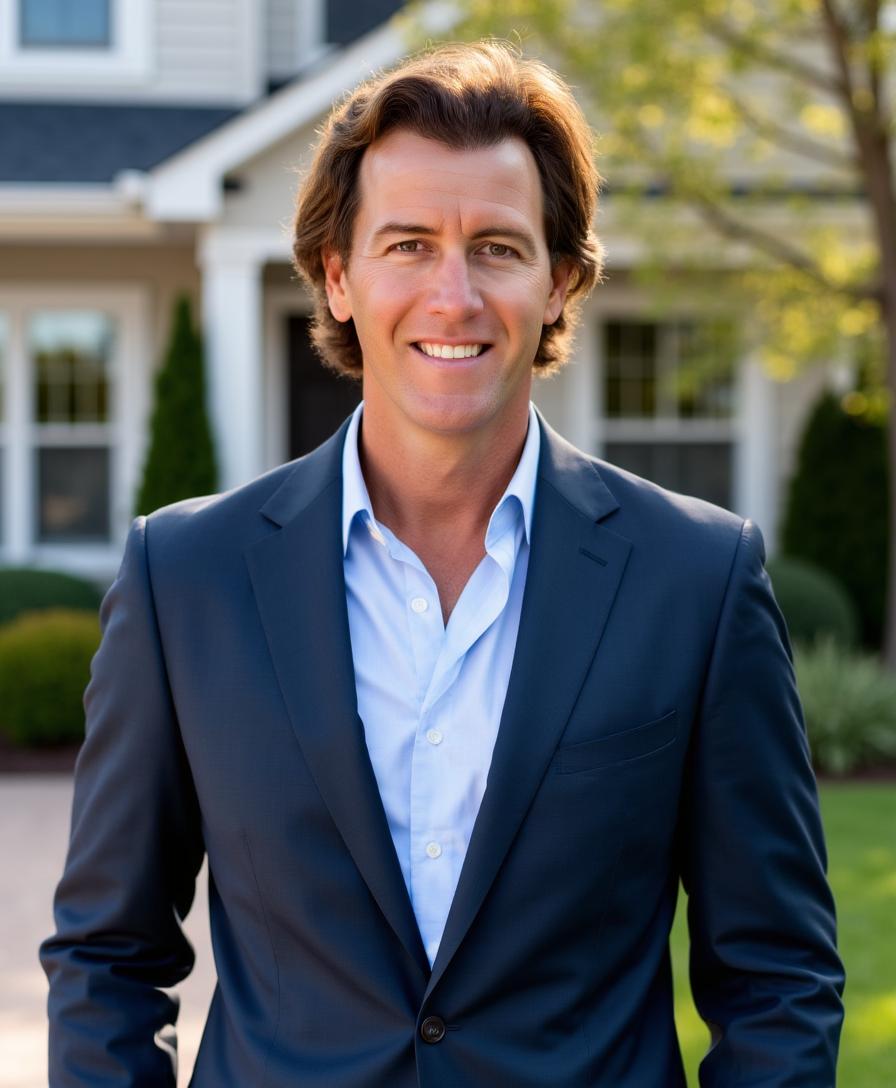
Greg DeTullio is a Florida-licensed Real Estate Broker and the founder of the Living in Jacksonville FL Team. With a decade of industry expertise, he has successfully managed over 200 closed transactions and earned five-star Google reviews. Greg specializes in Jacksonville relocation services and new construction within St. Johns County, proudly serving Nocatee, SilverLeaf, RiverTown, St. Johns, EverRange, Ponte Vedra Beach, and the surrounding Northeast Florida communities.
Living in Jacksonville FL Team | Phone: (904) 599-2125
Equal Housing Opportunity. Greg DeTullio, FL Real Estate Broker License #BK3332620, is a member of the Northeast Florida Association of Realtors (NEFAR). This article is general information only and does not constitute legal, tax, or financial advice. Confirm your specific costs, tax obligations, and transaction details with your attorney, tax advisor, lender, or closing officer.
Enjoy this blog post? Click here to subscribe for updates
Leave A Comment