
On July 29, the Federal Reserve did what it's done at every meeting so far this year: it held its key interest rate steady. But this meeting had a wrinkle worth paying attention to, and it says something about where rates and the housing market might be headed. If you're buying, selling, or building in Northeast Florida, here's what actually matters in that decision — and what doesn't.
1. What the Fed Actually Decided on July 29
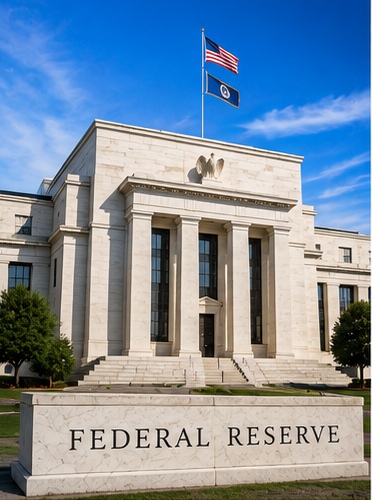
The Federal Open Market Committee voted 9-3 to keep its benchmark rate in the 3.50%–3.75% range, where it's sat since a series of cuts late last year. That part wasn't surprising. What was surprising: three regional Fed presidents voted against the hold because they wanted to raise rates instead — the first time three policymakers have pushed for a hike at the same meeting since 2016. That's a real split on the committee, and it tells you the Fed is more worried about inflation than the job market right now, not less.
There's no Fed meeting in August. The next rate decision — along with an updated economic projection — lands September 15–16.
Source: Federal Reserve — July 29, 2026 FOMC statement · CNBC coverage of the vote
2. What This Means for Mortgage Rates Right Now
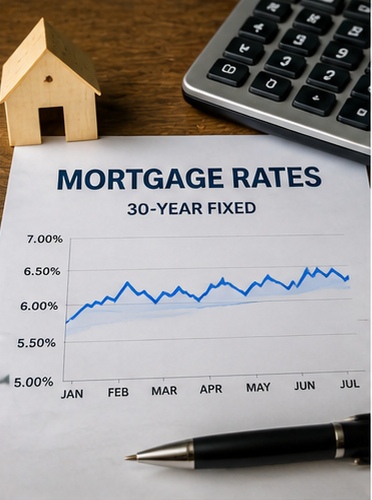
Mortgage rates don't move in lockstep with the Fed's rate — they track more closely with the bond market and inflation expectations. Right now, 30-year fixed rates are bouncing in the mid-6% to high-6% range depending on the day, the lender, and your credit profile. The Mortgage Bankers Association expects the 30-year to average around 6.5% for the rest of 2026; Fannie Mae's forecast is a touch lower, around 6.4%.
The honest takeaway: with three Fed officials leaning hawkish and no meeting until mid-September, there's no strong case for rates dropping sharply in the next several weeks. If you're waiting for a rate cliff before you buy, that wait may cost you more in home prices than it saves you in interest.
Source: Bankrate 30-year mortgage rates · NerdWallet mortgage rates
3. The National Housing Market: More Balance, Slowly
Nationally, the market is inching toward balance after years tilted hard toward sellers. For-sale inventory is recovering — expected to end 2026 roughly 12% below pre-2020 norms, an improvement from the 19% gap in 2025. Prices are still rising, but modestly, in the low single digits, a much slower pace than the pandemic years produced. Builders are adding supply fastest across the South, which is giving buyers more real negotiating room, even though most sellers are still holding out close to full asking price.
Source: Florida Realtors — 2026 Outlook: A More Balanced Market
4. Florida's Housing Market: Ahead of the National Curve
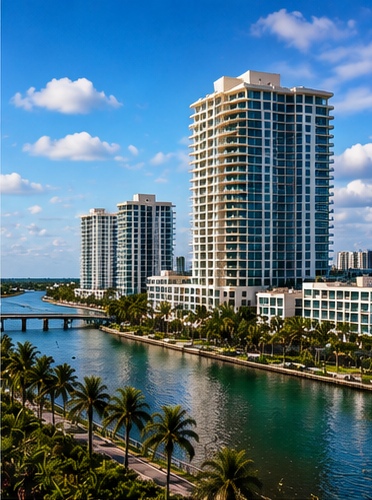
Florida got to this more-balanced footing before most of the country did. Statewide, single-family supply is running higher than it was a couple of years ago, and condo supply is well above that in several metros — partly a result of post-Surfside inspection and reserve requirements pushing some older buildings onto the market. Median price figures vary depending on the source and whether condos are included, generally landing somewhere in the high $300,000s to low $400,000s statewide. Coastal, high-demand metros like Miami and Fort Lauderdale still lean more toward sellers than the rest of the state.
Approximate figures — pricing varies by source and month. Verify current numbers for any specific market before relying on them.
5. Jacksonville and Northeast Florida: A More Complicated Picture Than the Headlines Suggest
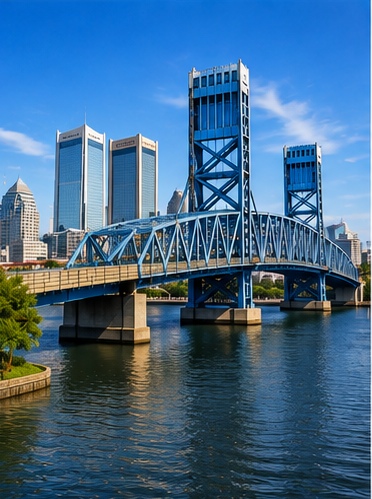
Here's where I want to be straight with you instead of chasing a clean headline. Some national write-ups have named Jacksonville as a market tipping toward buyers. The most current local data doesn't fully back that up.
Northeast Florida Association of Realtors data reported through realMLS shows inventory at about 4.35 months of supply as of May 2026 — down from 5.29 months a year earlier. That's the market getting a little tighter over the past twelve months, not looser. A NEFAR release from earlier in the year put January supply at 5.1 months, and one independent tracker showed a spring dip toward 3.9 months before it rebuilt. The numbers move depending on the source, the month, and whether you're looking at the city of Jacksonville or the full five-county NEFAR footprint. What they agree on: Jacksonville is sitting in a balanced-to-slightly-tighter market right now, well short of the 6-plus months that would clearly favor buyers, and it has not been steadily loosening through the year the way some coverage implies.
That doesn't mean there's no leverage out there for buyers. There is — it's just concentrated in a different place than resale inventory. It's in new construction, where builders are actively competing for buyers with incentives. More on that next.
Source: Momentum Realty / NEFAR realMLS data · NEFAR January 2026 market release
6. New Construction and Builder Incentives: Read the Fine Print

This is the part of the market where buyers genuinely do have leverage right now. Builders in growth corridors across Northeast Florida are actively offering rate buydowns and closing cost assistance to keep homes moving. That's real money — but it's not a gift. It's a negotiation, and it needs to be weighed against the whole picture: the base price, the lot premium, the upgrade list, the inspection process, and the closing timeline.
A rate buydown that saves you $8,000 over two years doesn't mean much if it's baked into a purchase price that's $15,000 over what the home would sell for without the incentive attached. The only way to know the difference is to have someone comparing the total deal against the market — not just the number on the sign in front of the model home.
This is also worth repeating plainly: the builder's sales representative works for the builder. Not for you. In a new-construction transaction, having your own buyer's agent typically costs you nothing extra — the commission is paid by the builder or seller — but it means someone is reviewing the contract, the incentive structure, and the build schedule with your interests in mind instead of the builder's.
Related reading: Discover Shearwater: Resort-Style Living in St. Johns County · First Coast Expressway Opens in Clay County: 9 Things Buyers Need to Know
7. The Risk Most Buyers Aren't Watching: Florida's Construction Labor Force
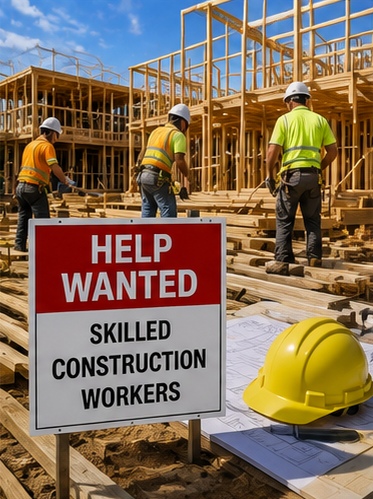
Here's the piece that connects everything above to what buyers will actually feel over the next year or two: builders can offer all the rate buydowns they want, but someone still has to physically build the home — and the labor pool doing that work has gotten smaller.
Immigrants make up roughly 38% of Florida's construction workforce, well above the 24% national average, which makes Florida's building industry more exposed than most states to labor disruption tied to stepped-up federal immigration enforcement. (That 38% figure comes from a January 2025 source — a bit dated, but still directionally accurate against more recent national reporting.) Nationally, an industry survey found about 28% of construction firms have already seen workforce disruptions tied to enforcement activity in the past six months, and a recent working paper from the National Bureau of Economic Research found that stepped-up enforcement measurably reduced construction employment among likely undocumented workers specifically.
The effect isn't limited to workers who are directly affected. Contractors describe a broader chilling effect, where documented workers — and even U.S. citizens in immigrant communities — stay away from job sites when enforcement activity is reported nearby. Central Florida builders have already flagged slower project timelines and rising costs tied to this exact issue. Industry groups estimate the country needs roughly 349,000 net new construction workers in 2026 just to keep pace with demand — a number that was a stretch before enforcement activity picked up.
A builder incentive is only as good as the crew that shows up to finish the house. If the labor pool tightens further, expect completion timelines to stretch — and some of today's incentives to quietly disappear. That's one more reason a buyer needs someone watching the build schedule, not just the sales price.
Sources: Walter Duke & Associates · WFTV — Central Florida labor shortage · Fortune · ConstructConnect on the NBER paper
8. What This Means for You
-
If you're closing in the next 9 days: your rate lock and your final walkthrough matter more than any headline about the Fed. Confirm your rate is locked, and don't let a builder rush your inspection to hit a closing date.
-
If you're planning to buy within 90 days: start comparing builder incentives against total price, not just the incentive itself. This is exactly where independent representation pays for itself.
-
If you're 180 days out or just starting to think about it: watch the September 15–16 Fed meeting, but don't build your whole plan around a rate drop that may not come. Get pre-approved now so you know your real number, and start narrowing down communities and builders with someone in your corner from the first visit — not after you've already signed something.
Frequently Asked Questions (FAQs)
Neither. The Fed held its benchmark rate steady at 3.50%–3.75% on July 29, 2026, the same range it's kept since a series of cuts in late 2025. Three of the twelve voting members wanted to raise rates instead. September 15–16, 2026. There is no Fed meeting in August. Not clearly. The most recent NEFAR-linked data shows Jacksonville's inventory tightening slightly over the past year, sitting in balanced territory rather than a clean buyer's market. The stronger leverage for buyers right now is in new construction incentives, not resale inventory. Often, yes — but only when weighed against the full contract: base price, lot premium, upgrades, and timeline. An incentive that looks generous on its own can still leave you paying more than the home is worth. That comparison is easier with independent representation reviewing the deal.Did the Fed raise or lower interest rates in July 2026?
When is the next Fed rate decision?
Is Jacksonville a buyer's market right now?
Are builder incentives worth taking?
Ready to Talk Through Your Move to Nocatee?
Whether you're weighing a resale home, a custom lot in River Landing, or one of the last new-construction opportunities in Nocatee, I'd rather you go in with clear eyes than a brochure's version of the story. As your independent buyer's representative, I don't work for the builder or the seller, I work for you, and that costs you nothing out of pocket.
LET'S TALK ABOUT YOUR NEXT MOVE
Call/Text: (904) 599-2125
Email: greg@livinginjacksonvillefl.com
Website: https://www.livinginjacksonvillefl.com/
Want more real estate insight like this? Follow and Subscribe to the Living in Jacksonville FL Team on YouTube (@LIVINGINJACKSONVILLEFL) for neighborhood tours, market updates, and buyer tips you won't find anywhere else.
About the Author

Greg DeTullio is the Broker/Owner of the Living in Jacksonville FL Team, a Northeast Florida brokerage specializing in relocation and new construction across Nocatee, St. Johns County, St. Augustine, Ponte Vedra, and Nocatee's surrounding master-planned communities. Greg hosts the weekly YouTube show Thursday Night Live, where he covers what buyers actually need to know before they move to Jacksonville.
Enjoy this blog post? Click here to subscribe for updates
Leave A Comment