
St. Johns County buyers pay the same core categories as buyers in Jacksonville (Duval County): lender fees, Florida documentary stamp tax on the mortgage at $0.35 per $100 of the loan amount, title charges, standard Florida recording fees, third-party service costs, and prepaid escrow items. What changes in St. Johns County is what sits on top of those categories. Community Development District (CDD) assessments, homeowners association estoppel fees, and a builder contract that shifts costs onto the buyer are all far more common here than in older Duval County neighborhoods, and they change the math in ways every buyer should understand before writing an offer.
What closing costs does a buyer pay in St. Johns County, Florida?
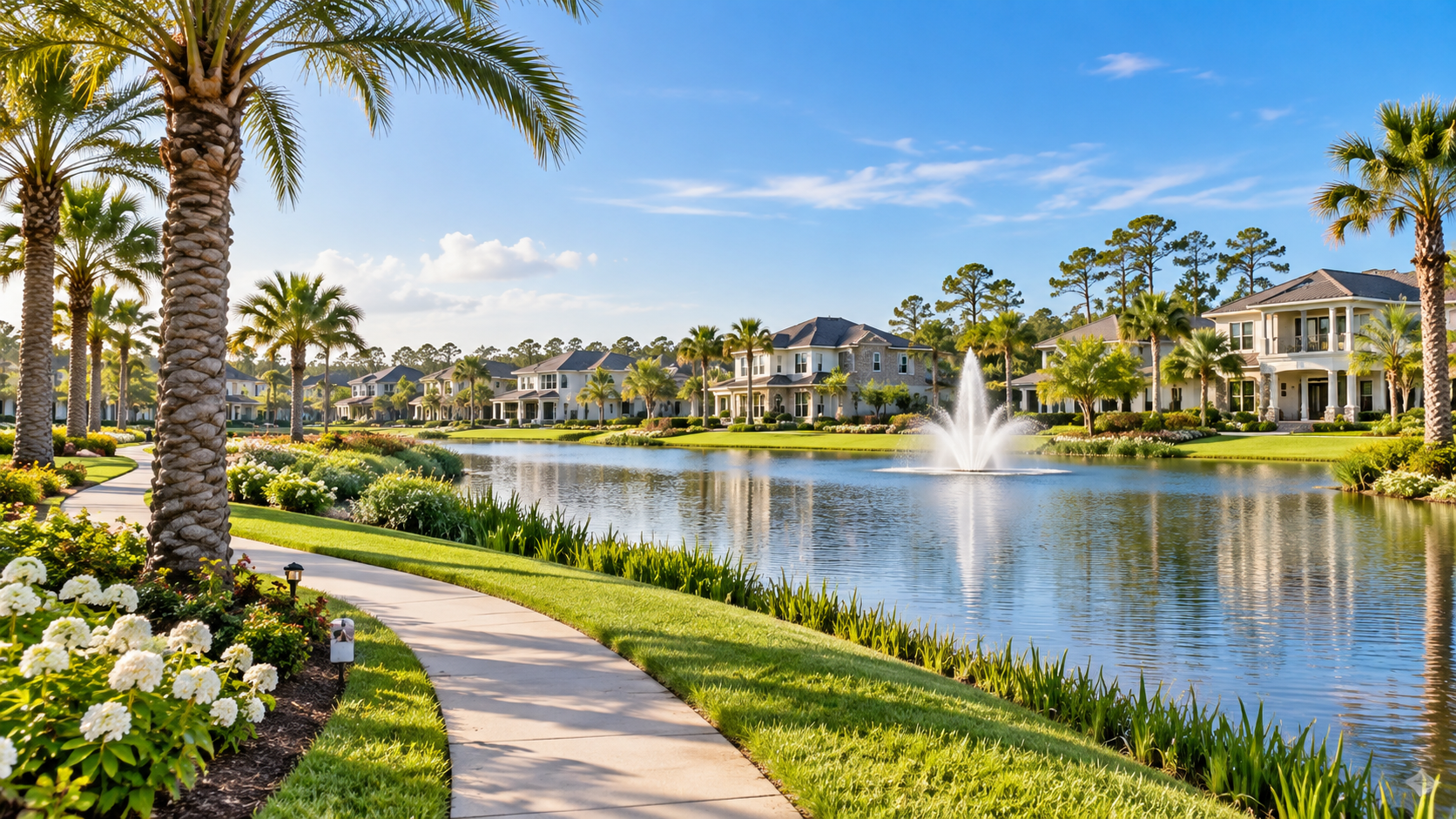
St. Johns County covers some of the fastest-growing master-planned communities in Northeast Florida, including Nocatee, RiverTown, SilverLeaf, Beacon Lake, TrailMark, and World Golf Village, along with Ponte Vedra Beach and St. Augustine. Buyers here pay the same five categories of closing costs that Jacksonville buyers pay across the county line in Duval County: state taxes on the transaction, lender fees, title and settlement charges, recording and third-party service costs, and prepaid items with escrow deposits. The rates for those categories are set by Florida law and don't change at the county line. What does change is the layer of local costs that sits on top: CDD assessments, HOA estoppel fees, and, for the large share of St. Johns County buyers purchasing brand-new homes, a builder contract that allocates costs differently than a resale contract would.
Key Takeaways
-
Florida's documentary stamp tax and Florida's standard recording fee schedule are set by state law and apply the same way in St. Johns County as they do in Duval County — the real differences between the two counties are local, not statutory.
-
CDD assessments, present in most master-planned communities in St. Johns County, add a layer of closing-day math that far fewer Duval County resale buyers ever encounter.
-
HOA estoppel fees are capped by Florida law at $299 for a standard request, plus up to $119 more for an expedited 3-business-day request and up to $179 more if the account is delinquent.
-
New construction closing costs differ from resale closing costs because a builder's contract typically assigns the buyer costs, like the deed doc stamps and the owner's title policy, that a resale seller customarily pays by local custom.
-
Independent buyer representation matters just as much, if not more, on new construction, since builder contracts are written to protect the builder and are rarely negotiable line by line.
I get some version of the same question from almost every buyer moving into St. Johns County, whether they're relocating from out of state or moving over from Jacksonville proper: "Is this going to work the same way it did on my last house?" If your last purchase was a resale in an older Duval County neighborhood, the answer is often no. CDDs, HOA estoppels, and builder contracts change the shape of the closing disclosure, and I want every buyer I work with to see those numbers coming well before we're at the closing table. If you're comparing this against a Jacksonville purchase, I've also written a companion piece on Jacksonville (Duval County) closing costs that covers the state-level basics in more detail.
How is St. Johns County different from Jacksonville (Duval County) at the closing table?
It's worth clearing up a common misconception first: the two most talked-about closing costs, Florida's documentary stamp tax and Florida's recording fee schedule, are not county-specific line items. They're set by state statute and apply identically in St. Johns County and Duval County.
-
Documentary stamp tax on the deed is $0.70 per $100 of the sale price statewide (outside Miami-Dade County), rounded up to the nearest $100, under §201.02, Florida Statutes.
-
Documentary stamp tax on the mortgage is $0.35 per $100 of the loan amount statewide, with no cap, under §201.08, Florida Statutes.
-
St. Johns County's recording fee schedule is $10.00 for the first page of a document and $8.50 for each additional page, plus a $1.00 indexing fee per name after the fourth — the same statutory schedule Duval County uses, per the St. Johns County Clerk's recording fee schedule.
-
A less-talked-about state tax also applies in both counties: Florida's intangible tax on new mortgages is 0.2% of the loan amount, or $2 per $1,000 borrowed, under §199.133, Florida Statutes. It's easy to miss on a closing disclosure, and it shows up whether you're financing in St. Johns County or Duval County.
So what actually is different in St. Johns County? Three things, and they're all local rather than statutory: how often a Community Development District (CDD) is involved, how often an HOA estoppel fee shows up because nearly every planned community has a mandatory HOA, and how much more likely you are to be buying new construction, where the builder — not a resale seller — sets the rules for who pays what.
Understanding CDD assessments at closing in St. Johns County
A Community Development District, or CDD, is a local special-purpose unit of government, not a private homeowners association, created under Chapter 190 of the Florida Statutes to finance and maintain infrastructure like roads, stormwater systems, and amenity centers for a planned community. Most of the large master-planned communities in St. Johns County, including Nocatee, RiverTown, SilverLeaf, and Beacon Lake, sit inside one or more CDDs. Duval County has some CDDs too, but nowhere near the concentration you'll find in St. Johns County's newer growth corridors.
A CDD assessment on your property tax bill typically has two pieces, and buyers need to understand both:
-
Operations and maintenance (O&M) assessment — an annual charge, similar in spirit to an HOA due, that funds the CDD's day-to-day upkeep of common infrastructure and amenities.
-
Debt service (bond) assessment — repays the bonds the CDD issued to build the original infrastructure, typically amortized over 15 to 30 years. In some cases a homeowner can prepay the remaining bond balance in full.
CDD assessment amounts, bond balances, and payoff terms vary community by community and change over time. Confirm current figures directly with the specific CDD's district manager or through the seller's disclosure before writing an offer, rather than relying on a prior year's tax bill.
On a resale purchase inside a CDD community, a buyer typically inherits the remaining bond assessment on the property unless the contract specifically states the seller will pay it off at closing. That's a negotiation point worth raising early, not something to discover after the fact. On new construction, the CDD's initial infrastructure costs are often already baked into the home's base price, but the ongoing bond and O&M assessments usually don't appear on a tax bill until after the first full tax year following the certificate of occupancy — which means a new-construction buyer's early tax and escrow estimates can look artificially low until that first CDD-inclusive bill arrives.
HOA estoppel fees and resale disclosures in St. Johns County
Nearly every planned community in St. Johns County has a mandatory HOA in addition to any CDD, which means an HOA estoppel certificate is part of most resale closings here. An estoppel certificate is the association's official statement of what the seller currently owes, and it protects the buyer from inheriting an unpaid balance.
-
Under §720.30851, Florida Statutes, an association must deliver the estoppel certificate within 10 business days of a written request, and the certificate is valid for 30 days.
-
As of the Florida Department of Business and Professional Regulation's current fee schedule, the certificate is capped at $299 for a standard request, plus up to $119 more for an expedited request delivered within 3 business days, and up to $179 more if the account is delinquent, per this estoppel fee update.
-
Who pays the estoppel fee is negotiable in the contract, but it's commonly treated as a seller-side cost in a resale transaction, since it discloses the seller's own account status.
A practical note from experience: in HOA-dense St. Johns County communities, ordering the estoppel request early avoids last-minute delays. New construction doesn't require an estoppel certificate at all, since there's no prior owner's account to disclose — but that doesn't mean a new-construction buyer skips CDD and HOA costs altogether, just that they show up differently, as explained below.
New construction closing costs vs. resale closing costs in St. Johns County
This is where St. Johns County diverges most from a typical Duval County resale closing, because such a large share of St. Johns County's inventory is new construction. A builder's purchase contract is not the standard FAR/BAR form most resale buyers are used to, and it is written to protect the builder, not the buyer. Builder contracts are commonly presented on a take-it-or-leave-it basis, with limited room to negotiate individual line items.
The clearest example is how closing costs get allocated. In a St. Johns County resale, local custom in North Florida commonly has the seller pay the deed doc stamps and the owner's title insurance policy. Many builder contracts flip that: the buyer is made responsible for the deed doc stamps, the owner's title policy, or both, simply because the builder wrote the contract that way. On top of that, builders frequently require or strongly incentivize buyers to use the builder's affiliated title company and preferred lender, and any closing-cost credit or rate buydown offered is usually contingent on doing so — which means it's built into the deal's overall pricing, not free money layered on top of an otherwise-standard resale transaction.
A few other differences worth knowing before you sign a builder contract:
-
There's no prior owner, so there's no HOA estoppel fee and no property tax proration credit worth much — new construction is assessed as vacant or partially improved land until the county reassesses it after closing, so the tax proration a buyer would normally receive from a resale seller is minimal to nonexistent.
-
CDD infrastructure costs are often reflected in the home's base price, but the ongoing bond and O&M assessments won't show up on a full tax bill until after the certificate of occupancy is issued and the county completes its next assessment cycle.
-
Builder contracts often limit or exclude a traditional home inspection contingency, relying instead on a builder-run punch list walkthrough near closing.
Resale vs. New Construction: Where the Costs Land
|
Cost Item |
Typical Resale (St. Johns County) |
Typical New Construction |
|---|---|---|
|
Deed doc stamps ($0.70/$100) |
Often seller-paid, by local custom |
Often shifted to buyer by builder contract |
|
Owner's title insurance |
Often seller-paid, by local custom |
Often buyer-paid, or buyer steered to builder's title company |
|
HOA estoppel fee |
Seller-side disclosure cost (capped by law) |
Not applicable — no prior owner account |
|
CDD bond assessment |
Buyer typically assumes remaining balance unless negotiated |
Often reflected in price; bond debt service starts after CO |
|
Doc stamp on mortgage / recording fees |
Same statutory rate |
Same statutory rate |
|
Property tax proration credit |
Based on seller's prior full-year tax bill |
Minimal to none — new/incomplete assessment |
|
Closing cost credits |
Negotiated case-by-case with the seller |
Often tied to using the builder's preferred lender |
Because builder contracts are written by and for the builder, having your own independent buyer's agent and, where the numbers justify it, your own attorney review the contract before you sign is one of the most protective steps a new-construction buyer can take. A builder's on-site sales representative works for the builder, not for you.
If you're comparing a resale in an established St. Johns County neighborhood against a new build in Nocatee, RiverTown, or SilverLeaf, I'm glad to run the actual numbers side by side for your specific scenario before you write an offer.
Which St. Johns County closing costs are fixed by law and which can I negotiate?
|
Cost Category |
Fixed or Negotiable? |
Notes |
|---|---|---|
|
Doc stamps on mortgage (buyer) |
Fixed by state law |
$0.35 per $100 of loan amount; no cap; same in every FL county except Miami-Dade surtax rules |
|
Doc stamps on deed |
Rate fixed; who pays is negotiable |
$0.70 per $100; seller pays by North Florida custom in a resale, but builder contracts often shift this to the buyer |
|
St. Johns County recording fees |
Fixed by state statute |
$10 first page, $8.50 each additional page — identical schedule to Duval County |
|
Intangible tax on new mortgage |
Fixed by state law |
0.2% of loan amount ($2 per $1,000); easy to overlook |
|
CDD O&M assessment |
Set by the CDD board annually |
Not negotiable in the contract; confirm current amount with the district manager |
|
CDD bond assessment payoff |
Negotiable in the contract |
Buyer assumes it by default in a resale unless the seller agrees to pay it off |
|
HOA estoppel fee |
Fee capped by state law; who pays is negotiable |
$299 standard / +$119 expedited / +$179 delinquent |
|
Owner's title insurance |
Negotiable in the contract |
Seller commonly pays in a St. Johns County resale by custom; builder contracts vary |
|
Appraisal, inspection, survey |
Buyer-side by custom; negotiable |
Seller can credit these; typically buyer-ordered and buyer-paid |
St. Johns County Local Spotlight
St. Johns County's growth is concentrated in a handful of master-planned communities, each with its own CDD and HOA structure. Nocatee, spanning both St. Johns and northern Duval County, is one of the largest CDD-governed communities in Florida. RiverTown and SilverLeaf sit along the St. Johns River corridor with their own district infrastructure. Beacon Lake and TrailMark are newer CDD communities closer to CR-210. Ponte Vedra Beach and St. Augustine round out the county with a mix of established coastal neighborhoods and historic-district resale inventory, where CDDs are far less common but HOA and, in St. Augustine's case, city utility lien searches, still factor into a closing disclosure. Every one of these areas has its own assessment schedule, so a CDD or HOA figure from one community should never be assumed to apply to another.
How I Help Buyers Navigate St. Johns County Closings
Whether you're comparing a resale in an established neighborhood to a new build in Nocatee, RiverTown, or SilverLeaf, or you're weighing a move-up purchase in Ponte Vedra Beach, I walk buyers through a 9/90/180-day plan built around understanding the true cost of ownership before you ever write an offer. That includes pulling the actual CDD assessment schedule, confirming HOA estoppel figures, and reading the builder contract line by line so you know exactly what you're responsible for at closing. As an independent buyer's representative, I don't work for the builder or the listing agent — my job is to protect your side of the transaction, and it costs you nothing out of pocket to have that representation.
Frequently Asked Questions (FAQs)
St. Johns County buyers pay Florida documentary stamp tax on the mortgage at $0.35 per $100 of the loan amount, lender fees, title and settlement charges, standard Florida recording fees, third-party costs like appraisal and inspection, and prepaid items including homeowners insurance and escrow deposits for taxes, HOA dues, and any CDD assessments. New construction buyers should also expect the builder's contract to allocate some of these costs differently than a resale contract would. The state-level costs are identical: Florida's documentary stamp tax rates and the standard Florida recording fee schedule apply the same way in St. Johns County and Duval County. The practical differences are local — St. Johns County has far more CDD-governed communities, a higher share of mandatory HOAs, and a much larger share of new-construction inventory, all of which change what shows up on a St. Johns County closing disclosure compared to a typical Duval County resale. A Community Development District (CDD) assessment is a charge on your property tax bill that funds infrastructure and amenities for a planned community, authorized under Chapter 190 of the Florida Statutes. It typically includes an annual operations and maintenance charge plus a debt service charge that repays the district's infrastructure bonds. On a resale, a buyer typically assumes the remaining bond balance unless the seller agrees in the contract to pay it off, so confirming current CDD figures before making an offer is an important step in a St. Johns County purchase. No. An HOA estoppel certificate discloses what a prior owner currently owes the association, so it doesn't apply to a brand-new home with no prior owner's account. New-construction buyers still take on HOA dues and CDD assessments going forward, but those show up as ongoing costs rather than a one-time estoppel fee at closing. Cash buyers skip the mortgage documentary stamp tax, the mortgage intangible tax, and all lender fees and lender's title insurance, since there's no loan being recorded. You still owe the deed documentary stamp tax (subject to who pays by contract), St. Johns County recording fees, a title search and settlement fee, any HOA estoppel fee on a resale, CDD assessments tied to the property, and third-party costs like inspection and survey.What closing costs does a buyer pay in St. Johns County, Florida?
Are St. Johns County closing costs different from Jacksonville's?
What is a CDD assessment and how does it affect my closing costs?
Do I still need to pay an HOA estoppel fee if I'm buying a new construction home?
If I pay cash for a home in St. Johns County, which closing costs go away?
St. Johns County closing costs follow the same Florida tax rates and recording fee schedule as Jacksonville, but CDDs, HOA estoppel requirements, and builder contracts on new construction change what actually lands on your closing disclosure. Knowing which costs are fixed by law and which are set by the community, or by the builder, is what lets you negotiate from an informed position instead of finding out at the closing table. I walk every buyer I work with through those numbers, resale or new construction, before we ever make an offer.
LET'S TALK ABOUT YOUR NEXT MOVE
Call/Text: (904) 599-2125
Email: greg@livinginjacksonvillefl.com
Website: https://www.livinginjacksonvillefl.com/
Want more real estate insight like this? Follow and Subscribe to the Living in Jacksonville FL Team on YouTube (@LIVINGINJACKSONVILLEFL) for neighborhood tours, market updates, and buyer tips you won't find anywhere else.
About Greg DeTullio, Broker/Owner, Living in Jacksonville FL Team
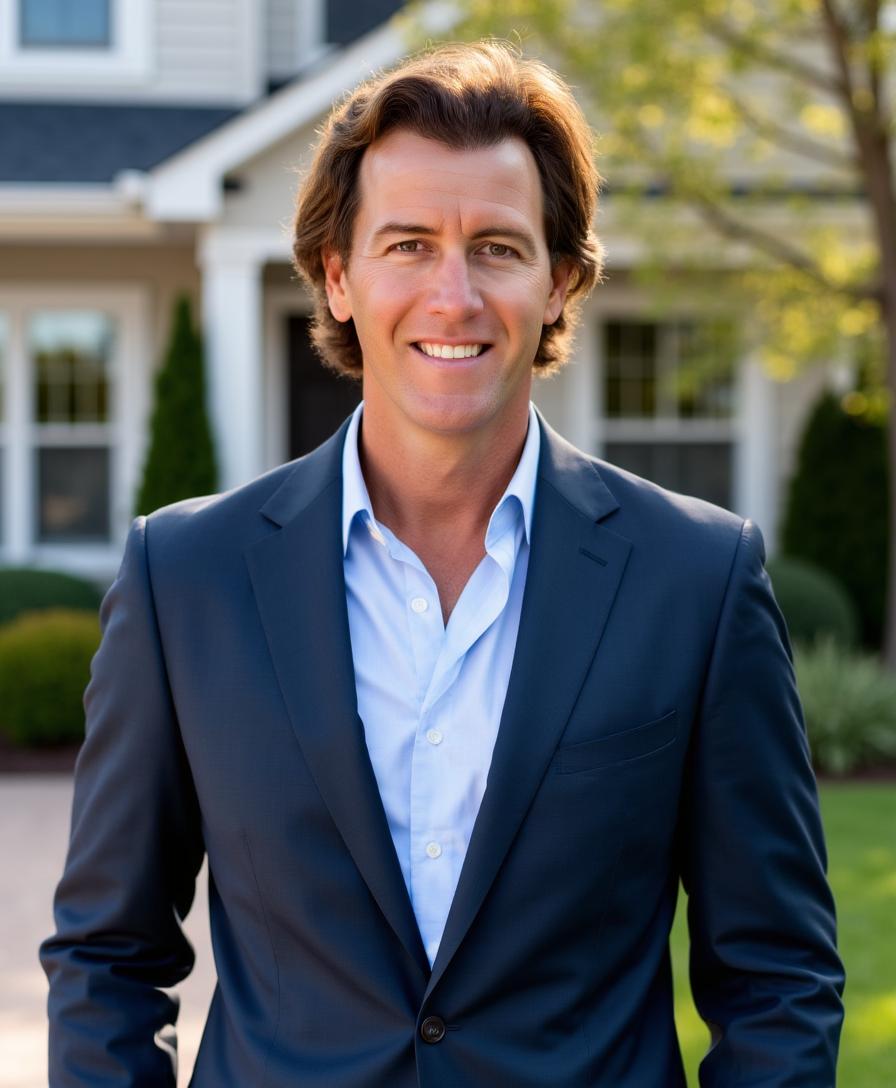
Greg DeTullio is a Florida-licensed Real Estate Broker and the founder of the Living in Jacksonville FL Team. With a decade of industry expertise, he has successfully managed over 200 closed transactions and earned five-star Google reviews. Greg specializes in Jacksonville relocation services and new construction within St. Johns County, proudly serving Nocatee, SilverLeaf, RiverTown, St. Johns, EverRange, Ponte Vedra Beach, and the surrounding Northeast Florida communities.
Living in Jacksonville FL Team | Phone: (904) 599-2125
Equal Housing Opportunity. Greg DeTullio, FL Real Estate Broker License #BK3332620, is a member of the Northeast Florida Association of Realtors (NEFAR). This article is general information only and does not constitute legal, tax, or financial advice. Confirm your specific costs, tax obligations, and transaction details with your attorney, tax advisor, lender, or closing officer.
Posted by Greg DeTullio on
Enjoy this blog post? Click here to subscribe for updates
Leave A Comment